Call Today For Professional Concrete Floor Finishing

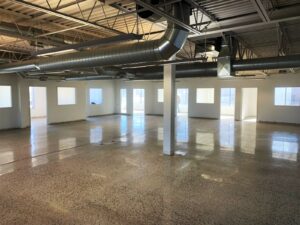
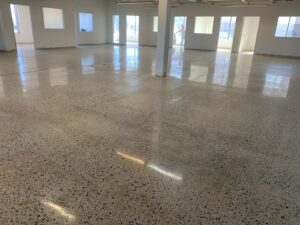
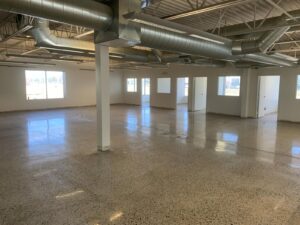
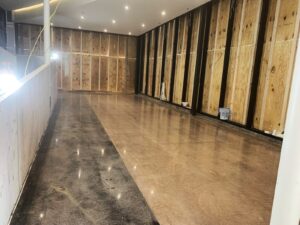
Basement Concrete Polishing

Moisture-Resistant, Mold-Proof Floors Built for Below-Grade Living

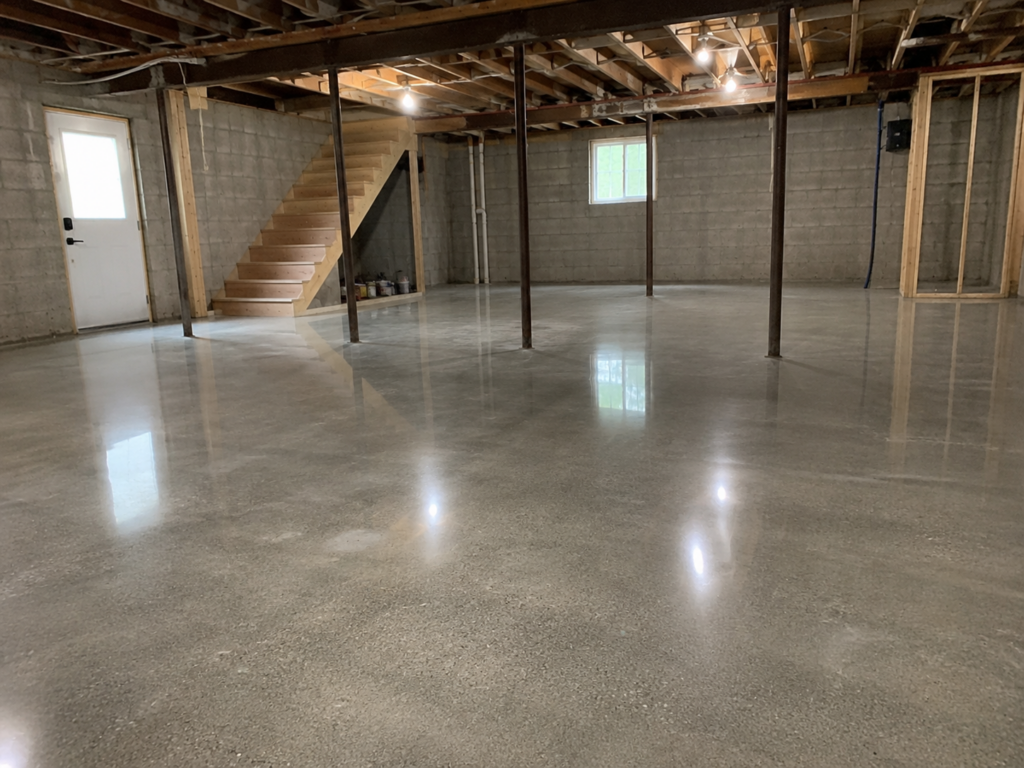
Basements are the hardest floors in the house — cold, damp, and prone to moisture from the soil below. Carpet molds, laminate warps, and tile lifts. Polished concrete is different: it embraces the slab you already have, resists moisture and mold, and turns a raw basement into a finished, livable space. GP Concrete Polishing finishes basement slabs across Michigan for homeowners who want durability without the moisture risk.

Basement Coating & Polishing

Basement floors face constant challenges from ground moisture, humidity, and daily wear. Without the right protection, concrete can develop stains, dusting, surface deterioration, and moisture-related issues that affect both appearance and long-term durability. Professional basement coating and polishing create a stronger, more resilient surface that is built to handle these demanding conditions.

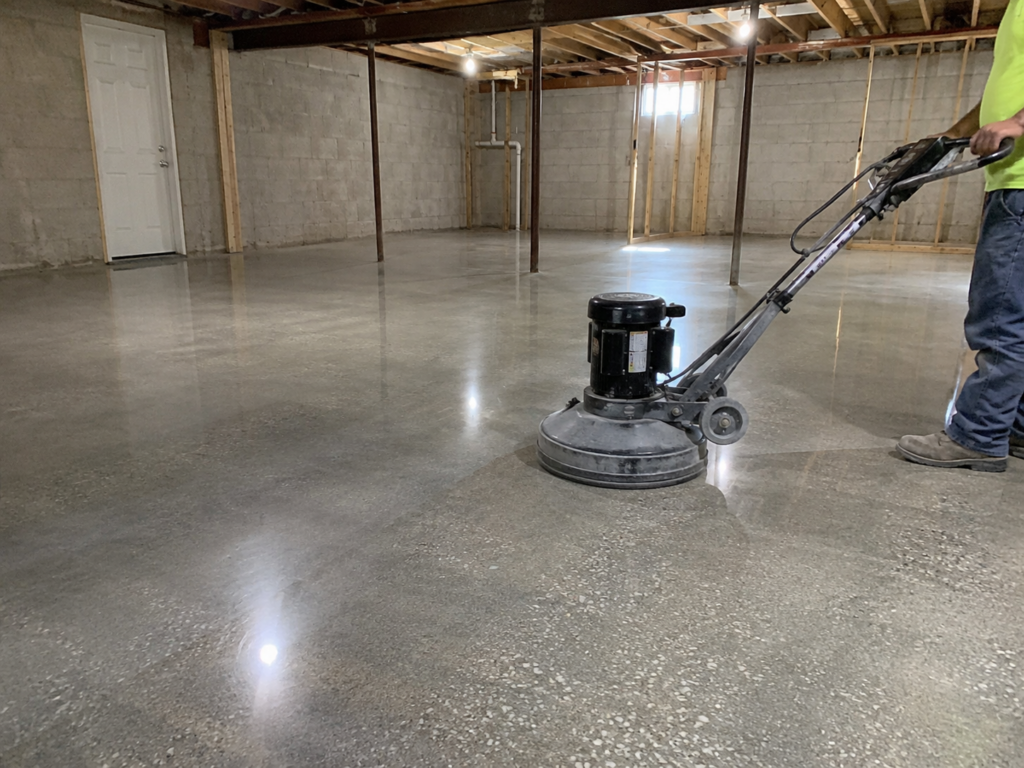
Our process begins with a thorough evaluation of the concrete slab, including moisture testing, crack repair, and surface preparation. Depending on the condition of the floor and the performance requirements of the space, we apply specialized coatings or mechanically polish the concrete to achieve a durable, attractive finish. This approach helps protect the slab while improving cleanliness and overall performance.

The result is a basement floor that is easier to maintain, more resistant to moisture and abrasion, and visually appealing. Whether the space is used for storage, utilities, commercial operations, or finished living areas,

Why Polished Concrete Is the Right Basement Floor

Most basement flooring fails for the same reason: it sits on top of a slab that releases moisture. Carpet traps it and grows mold. Wood and laminate absorb it and warp. Polished concrete works with the slab instead of fighting it — finishing the surface so it resists moisture while staying breathable and mold-resistant.

Moisture & Mold Resistant

Polished concrete won't rot, warp, or harbor mold like carpet or wood below grade.

Pairs With Radiant Heat

Works with in-floor heating to take the chill off cold basement slabs.

Near-Zero Upkeep

No carpet to replace, no grout to scrub. Dust-mop and go.

Minimal Disruption

Reflects light to make low-light, windowless basements feel larger.

Reduces Lighting Load

Finish the slab already poured — no subfloor, no height loss.

Lowest Total Cost

No moisture-driven replacement cycles common to other basement floors.

When Should You Coat or Polish a Basement Floor?

Basement floors face challenges that above-grade concrete rarely experiences. Ground moisture, humidity fluctuations, and limited airflow can all contribute to staining, surface deterioration, and long-term damage. A professionally coated or polished basement floor helps protect the concrete from these conditions while creating a cleaner, brighter, and more durable space.

Unlike untreated concrete, a properly finished basement floor resists dusting, improves appearance, and makes routine maintenance much easier. Whether the basement is used for storage, living space, or commercial purposes, investing in the right flooring system helps preserve the value and performance of the entire property.

Moisture protection is especially important in below-grade environments because water vapor naturally moves through concrete over time.

Levels of Polished Concrete — Interactive

The levels of polished concrete

Polished concrete is measured by two things: the diamond grit it's refined to, and the gloss reading of the finished surface on a 60° meter. Drag the slider to see how each level looks and how reflective it gets.

800 Grit
Satin / Honed
60 degree gloss meter 40 Gloss · 60°
Medium gloss
FinishSatin / Honed
GlossMedium — 30 to 50

Soft, even glow. Light reflection without glare. Most popular interior level.

How We Manage Below-Grade Moisture

Basement slabs sit directly against soil, so ground moisture and hydrostatic pressure push vapor up through the concrete. The wrong finish traps that vapor and fails. Our below-grade system tests, densifies, and seals so the floor resists moisture without trapping it. Read the cross-section from the ground up:

GP Concrete Polishing Cards
01

Sub-Slab / Vapor Source

Ground moisture and hydrostatic pressure can rise from the soil below, creating vapor movement beneath the concrete system.

02

Existing Concrete Slab

The concrete slab is tested for moisture using calcium chloride or RH probe methods before any polishing work begins.

03

Penetrating Densifier + Sealer

Lithium silicate hardens the slab while a moisture-tolerant sealer helps resist vapor without trapping it inside.

04

Polished Concrete Surface

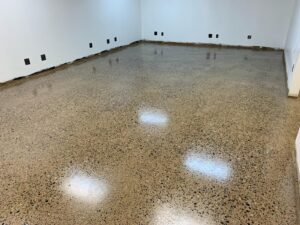
The finished surface is densified, sealed, breathable, and polished to a smooth 400–800 grit professional finish.

Built for Every Commercial Space

Finished Living Spaces

Family rooms, home theaters, and guest suites get a clean, modern floor that won't mold or smell musty.

Home Gyms

A hard, level, moisture-resistant surface that stands up to equipment and dropped weights better than foam or carpet.

Workshops & Storage

A matte-ground finish gives a durable, easy-sweep surface for utility areas without the cost of a full polish.

Basement Apartments & Rentals

Durable and low-maintenance between tenants — no carpet replacement cycles.

Moisture Testing Comes First

No reputable basement floor goes down without moisture testing. We measure the slab before quoting a finish, because the moisture condition determines which densifier, sealer, and grit level will hold up long-term.

Concrete Moisture Testing Table
Test Method
What It Measures
Why It Matters
Calcium Chloride (ASTM F1869)
Moisture vapor emission rate (MVER) from slab surface
Identifies how much vapor the slab is releasing before finishing
Relative Humidity Probe (ASTM F2170)
Internal slab humidity at depth
Most reliable read of true moisture condition inside the slab
Plastic Sheet / Visual
Surface condensation, efflorescence, staining
Quick field indicator of an active moisture problem

TESTIMONIALS

What Our Client Says

GP Concrete Polishing completely transformed our garage floor. The finish looks incredible, and the entire process was professional from start to finish.

Michael R.

Homeowner

We hired GP Concrete Polishing for our retail showroom, and the polished concrete floors gave the entire space a clean and modern appearance.

Sarah T.

Business Owner

Their team was knowledgeable, efficient, and delivered outstanding results for our warehouse flooring project. Highly recommend their services.

David L.

Warehouse Manager
Michael R.
The team did an amazing job on our garage floor. The finish looks incredible and the entire process was professional from start to finish. Highly recommend GetPro Concrete Coatings.
Sarah T.
Very happy with the results of our basement floor coating. The crew arrived on time, explained everything clearly, and completed the project faster than expected.
David L.
Excellent workmanship and attention to detail. Our commercial flooring project turned out better than we imagined and the coating has held up perfectly.
Jennifer M.
Professional, reliable, and easy to work with. The decorative flake system completely transformed our garage and gave it a clean modern look.

Areas We Serve

GP Concrete Coatings provides epoxy and polyaspartic floor coatings throughout Southeast Michigan.

Don’t see your city? Contact us — we likely serve your area.

Explore Our Recent Work

Frequently Asked Questions

Can you polish a basement floor that gets damp?

We test the slab first. Many damp basements can still take a polished finish using moisture-tolerant densifiers and sealers. If there’s an active water intrusion problem, that has to be corrected before any flooring goes down.

Bare concrete is cool underfoot, but it pairs perfectly with in-floor radiant heat and area rugs. Many homeowners add radiant heat during the project for year-round comfort.

Often, yes. Epoxy is a film coating that can peel or bubble if moisture pushes up from below. Polished concrete is the slab itself, refined and densified, so it stays breathable and won’t delaminate.

No. Polishing finishes the existing slab with no added subfloor or underlayment, so you keep every inch of basement headroom.

We assess and prep first — repairing cracks, removing old carpet glue or tile mastic, and grinding the surface flat before polishing.